Ageing is a natural and inevitable part of
life. As the years pass, the body undergoes physical changes, cognitive
abilities may gradually shift, and emotional well-being can become increasingly
important. However, healthy ageing is not simply about living longer; it is about
maintaining physical vitality, mental clarity, emotional balance and a sense of
fulfilment throughout life.
While genetics and lifestyle choices play
significant roles in the ageing process, the importance of managing stress and nurturing
inner well-being is gaining increasing attention. Among the natural approaches
that can support overall health is Transcendental Meditation (TM), a simple, effortless
technique that allows the mind to settle into a state of deep rest and inner
calm.
Developed from the ancient Vedic tradition
and introduced worldwide by Maharishi Mahesh Yogi, Transcendental Meditation
offers an approach to cultivating inner balance that may contribute to healthy
ageing and improved quality of life.
Understanding Healthy Ageing: Beyond Physical Health
Healthy ageing involves more than preventing
illness or maintaining physical fitness. It encompasses several interconnected
aspects of well-being, including physical health, cognitive functioning,
emotional stability and social engagement.
As people grow older, they may experience
changes in memory, concentration, sleep patterns and energy levels. Life
transitions, retirement, changing family responsibilities and social isolation
can also influence emotional health.
Chronic stress is another important
factor associated with ageing. Prolonged exposure to stress can affect the body's
physiological processes, including cardiovascular functioning, sleep and
hormonal balance. Therefore, finding effective ways to manage stress is an
important part of maintaining long-term well-being.
A holistic approach to healthy ageing combines
balanced nutrition, regular physical activity, adequate sleep, meaningful
social connections and practices that support mental and emotional health.
Transcendental Meditation and the Ageing Process
Transcendental Meditation is a natural,
effortless technique practised for 20 minutes twice daily while sitting
comfortably with the eyes closed. Unlike practices that require concentration, contemplation
or control of thoughts, TM allows the mind to settle naturally towards a state
of restful alertness.
During this experience, the body gains an
opportunity to settle into deep rest while the mind remains awake and alert.
This distinctive state of rest is particularly relevant when considering the
relationship between stress, physiological functioning and ageing.
Regular practice of Transcendental Meditation
may help support the body's natural ability to recover from stress. By
encouraging deep relaxation, it offers a way to address one of the important
lifestyle factors associated with the ageing process.
Research Insight: Biological Age and Long-Term TM Practice
Scientific research has explored the
relationship between Transcendental Meditation (TM) and various aspects of
healthy ageing, including biological age, cognitive functioning, psychological
well-being and stress-related processes. Studies conducted over several decades
offer interesting insights into the potential role of regular TM practice in supporting
well-being during the ageing process.
Biological Age and Long-Term TM Practice
An interesting study published in the International
Journal of Neuroscience in 1982 examined the relationship between the Transcendental
Meditation and TM-Sidhi programmes and biological ageing.
The research, conducted by Robert K.
Wallace, Michael Dillbeck, Eliha Jacobe and Beth Harrington, involved 84 participants
with an average age of 53 years. Researchers assessed biological ageing using
three indicators: auditory threshold, near-point vision and systolic blood
pressure.
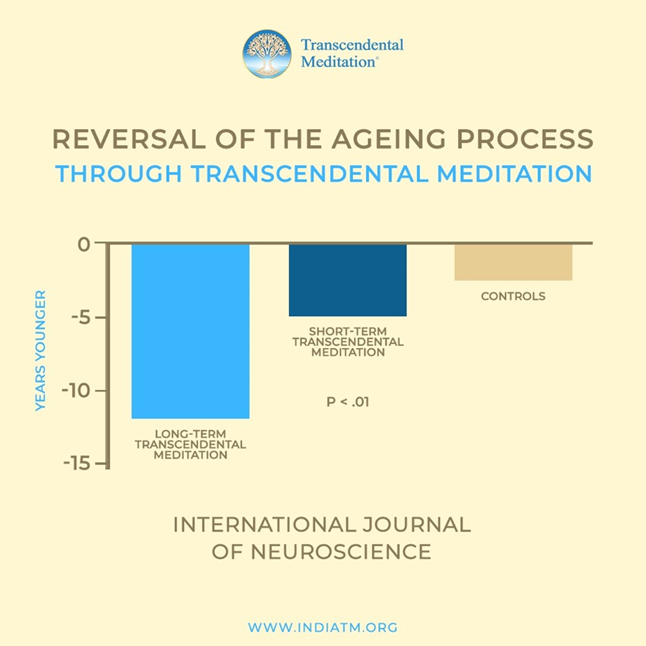
The findings revealed that participants who
had practised the TM and TM-Sidhi programmes for more than five years had a
mean biological age 12 years younger than the general population. Short-term
practitioners showed a biological age five years younger, while the control
group showed a difference of 2.2 years. The study also reported a significant
relationship between the duration of programme practice and biological age.
Supporting Cognitive Health During Ageing
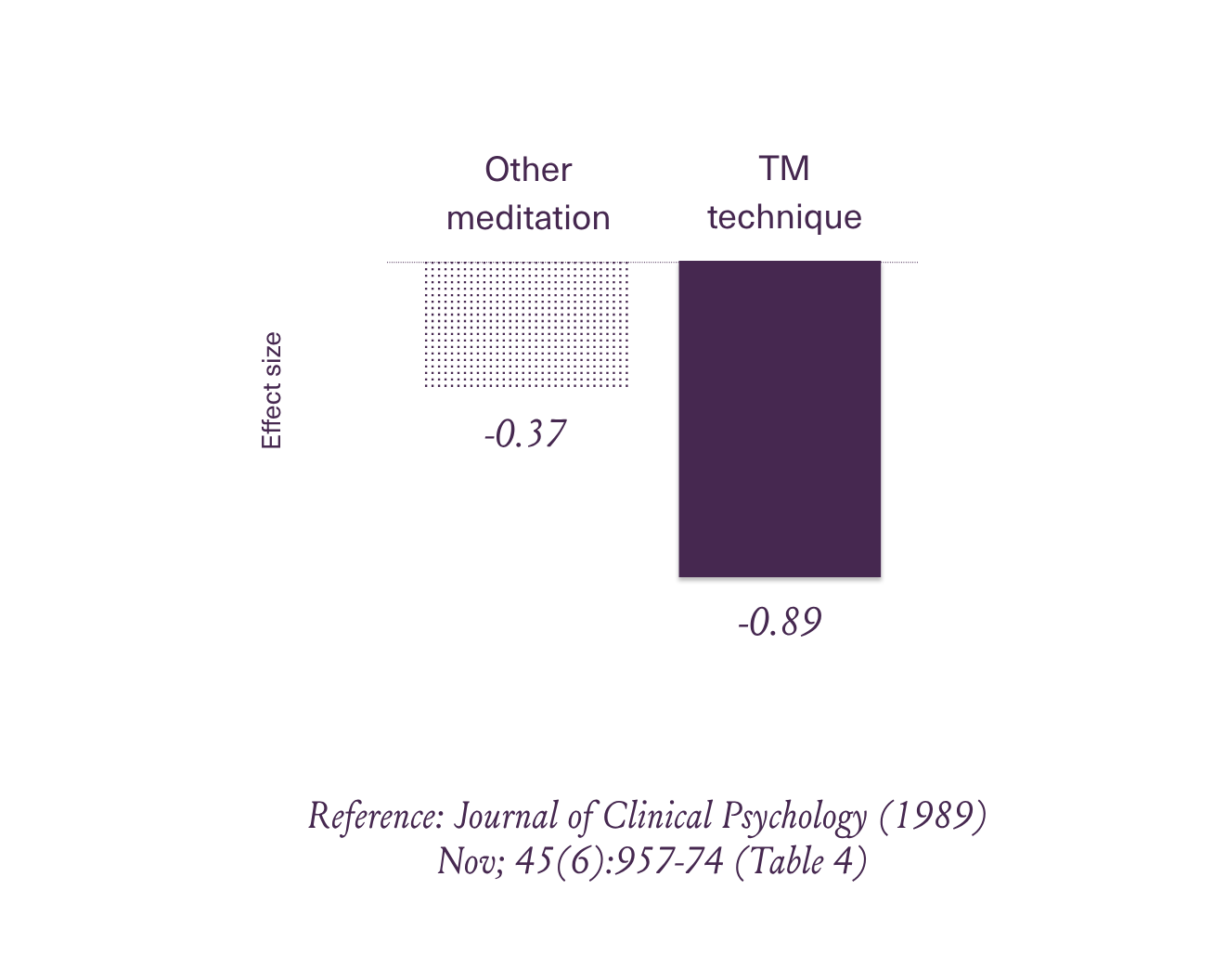
Further
research published in the Journal of Personality and Social Psychology in 1989 explored
the effects of Transcendental Meditation, mindfulness training and relaxation
among older adults.
The study involved
73 residents of eight homes
for older adults,
with an average
age of 81 years. Participants were assigned to different intervention
groups, including a TM group, mindfulness training, relaxation and a
no-treatment control group.
The findings indicated that the TM group
showed improvements in several areas, including paired-associate learning, cognitive flexibility, mental health and systolic blood pressure. The study also reported encouraging
differences in survival rates over a three-year follow-up period.
Insights into Gene Expression, Brain Function and Stress
A more recent study published in Biomolecules
in 2025 explored possible anti-ageing and stress-related effects associated
with long-term Transcendental Meditation practice.
Researchers examined differences in gene
expression, EEG measures related to cognitive functioning, and hair steroid levels
among older TM practitioners and comparison groups.
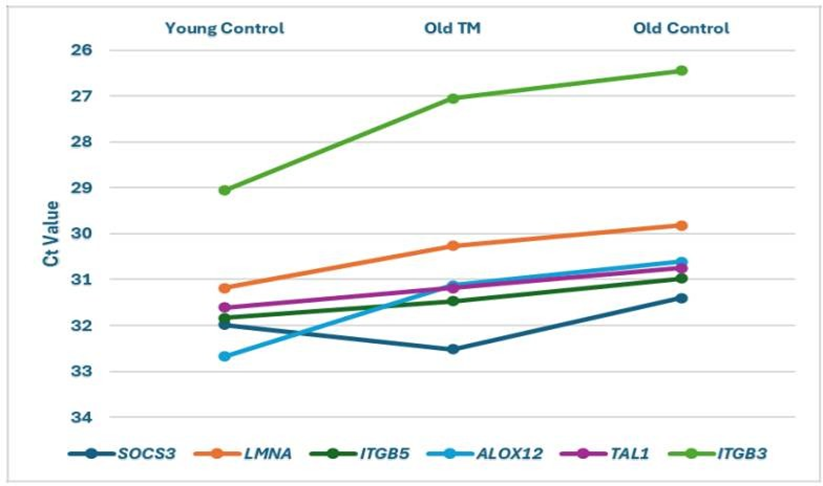
One of the study's key findings concerned
the expression of genes associated with ageing. As illustrated in Figure 3, the
expression levels of certain age-associated genes among older TM practitioners
were closer to those observed in younger controls than in older controls. For
some genes, the differences between older TM practitioners and younger controls
were not statistically significant. The researchers also observed differences
in EEG measures associated with cognitive processing: older TM practitioners showed
shorter N2, P3a and P3b latencies than older controls, with some measures
comparable to those of younger controls.
The study additionally examined hair
cortisol and cortisone, which are indicators related to the body's stress response.
The cortisol-to-cortisone ratio was higher in the control subgroups than in the
corresponding age-matched TM subgroups.
These findings offer interesting
directions for understanding the possible relationship between long-term TM
practice, gene expression, cognitive functioning and stress-related processes. However,
the study was observational and cross-sectional, so the findings do not establish
that TM caused the differences or that it reverses biological ageing.
A Growing Area of Scientific Exploration
Together, these studies offer insights into
different dimensions of healthy ageing. While the 1982 research examined
physiological indicators associated with biological age, the 1989 study
explored cognitive functioning, psychological well-being and survival among
older adults. The 2025 research adds further perspectives by examining gene expression,
brain-function measures and stress-related biomarkers.
Although further research is needed, these
findings provide an encouraging foundation for continued scientific exploration
of Transcendental Meditation and its potential role in supporting healthy
ageing.
Promoting Emotional Well-being and Mental Health
Emotional well-being is equally important
as physical and cognitive health during the ageing process.
Older adults may experience loneliness, anxiety,
changes in social relationships or concerns about declining independence. These
experiences can influence their overall quality of life.
Transcendental Meditation provides an
opportunity to step away from everyday mental activity and experience deep
inner rest. Regular practice may help individuals manage accumulated stress, develop
greater emotional stability and approach everyday challenges with increased
clarity.
By supporting relaxation and reducing stress,
TM may also contribute to better sleep and an improved sense of well-being.
Importantly, maintaining mental health
during ageing is not simply about addressing difficulties when they arise. It also
involves nurturing a positive relationship with oneself, developing resilience
and remaining connected with family, friends and the wider community.
Meditation can be one part of this broader
approach, alongside appropriate medical and psychological care whenever needed.
Natural Ways to Support
Healthy Ageing

Healthy ageing requires consistent attention
to everyday habits. While no single practice can prevent all age-related
changes, certain lifestyle choices can support overall well-being.
Some important ways to promote healthy ageing
include:
- Stay physically active: Walking, yoga, stretching and other suitable
physical activities help maintain mobility, strength and cardiovascular
health.
- Eat a balanced diet: Include nutritious foods, vegetables, fruits,
whole grains and adequate protein to support the body's
changing nutritional requirements.
- Prioritise quality
sleep: Maintain a regular
sleep schedule and create an environment
that encourages restorative rest.
- Stay socially
connected: Meaningful relationships and participation in community
activities can support emotional well-being.
- Keep
the mind engaged: Reading, learning new skills,
pursuing hobbies and engaging in intellectually stimulating activities help maintain mental
engagement.
- Manage everyday
stress: Incorporate relaxation practices
into daily routines
to support mental and emotional balance.
- Practise Transcendental Meditation: Regular practice offers
a structured opportunity to
experience deep rest and support overall well-being.
Together, these habits create a foundation
for a healthier and more fulfilling ageing experience.
Ageing Gracefully Through Inner Well-being
Growing older does not mean losing the
opportunity to experience vitality, creativity and personal growth. Healthy ageing
is about maintaining a harmonious relationship between the body, mind and inner
self.
Maharishi Mahesh Yogi emphasised the importance
of developing the full potential of human consciousness. From this perspective,
inner development is not separate from everyday life; it can enrich how
individuals experience relationships, responsibilities and the world around them.
Transcendental Meditation offers a simple
way to incorporate this principle into daily living. Its regular practice
provides an opportunity to experience deep rest, allowing individuals to return
to their daily activities with greater freshness and alertness.
As research continues to explore the relationship
between meditation, stress and age-related changes, TM presents an interesting
approach to supporting holistic well-being.
Ultimately, healthy ageing is not measured
only by the number of years lived, but also by the quality of those years. By
combining healthy lifestyle choices with practices that nurture inner
well-being, individuals can work towards a life marked by greater balance,
clarity and fulfilment at every stage.
Frequently Asked Questions (FAQs)
1.
How does Transcendental Meditation support healthy ageing?
Transcendental Meditation promotes a state
of deep rest and restful alertness, which may help the body recover from
stress. Research has associated long-term practice with favourable differences
in certain physiological indicators of biological ageing. It may also support
emotional well-being and cognitive functioning.
2.
Can meditation improve mental health in older adults?
Meditation may support mental health by encouraging
relaxation, helping manage stress and promoting emotional balance. Research involving
older adults has reported improvements in certain measures of mental health and
cognitive flexibility among participants practising Transcendental Meditation.
3.
How does meditation support
cognitive health during
ageing?
Meditation may support cognitive health
by helping manage stress and promoting mental clarity. A 1989 study involving
elderly participants reported improvements in paired-associate learning and cognitive
flexibility in the TM group. However, meditation should be considered a
supportive practice rather than a treatment for cognitive disorders.
4.
How often should one practise Transcendental Meditation?
The recommended practice is 20 minutes twice
daily, once in the morning and once in the evening. TM is taught personally by
a certified teacher through a structured course, with individual guidance and
follow-up.
5.
Is it too late to start
meditation in old age?
No. Adults can learn Transcendental Meditation
at different stages of life. Its simple and effortless approach makes it
accessible to older adults who wish to incorporate a regular practice
supporting rest, relaxation and overall well-being.