The mind is naturally active. Thoughts, memories,
plans, emotions and ideas arise throughout the day, often without conscious
effort. When the mind becomes particularly busy, it can be tempting to think
that meditation means learning how to control, suppress or stop thoughts.
But what if meditation did not require controlling
the mind at all?
The Transcendental Meditation technique takes
a different approach. Rather than trying to force thoughts away or deliberately
control mental activity, it allows the mind to settle naturally towards quieter
levels of awareness.
This distinction is important. Trying to control
thoughts can itself become another mental task. Transcendental Meditation is an
effortless practice that allows the mind to move naturally beyond increasingly
active levels of thinking.
Does Transcendental Meditation control thoughts?
No. Transcendental Meditation does not involve
controlling thoughts.
There is no need to fight them,
suppress them, analyse
them or deliberately replace them. The practice does not require the mind to
become blank or to maintain a particular state through effort.
As the mind settles inward, awareness
becomes quieter and more settled. There is an important difference between trying
to control the mind and allowing it to settle
naturally. TM provides an opportunity to experience quieter levels of
awareness without making thought itself the object of attention.
How does Transcendental Meditation work?
The Transcendental Meditation technique is practised
comfortably with the eyes closed,
for about 20 minutes twice a day. It is an effortless practice and does
not require intense concentration, monitoring of thoughts or an attempt to
create mental silence.
As the mind settles inward,
it can naturally move from more active levels of thinking towards progressively quieter levels of
awareness.
An everyday experience can help illustrate this.
Think about a time when you became deeply
absorbed in something enjoyable. You may have
noticed that other
thoughts and distractions gradually faded into the background without you deliberately trying to push them away.
In a similar
way, TM does not ask the mind to become
blank. It allows the mind to settle naturally and effortlessly.
There is also no need to evaluate whether
you are "thinking too much" or whether you are meditating correctly. The practice is not about achieving a
particular state through effort; it is about allowing
the mind to experience deeper levels of awareness naturally.
Going beyond thought
The idea of "going beyond thought" does
not mean eliminating thought.
Thinking is a normal and essential part of
everyday life. We need thoughts to plan, create, communicate, solve problems
and make decisions.
Going beyond thought means experiencing
levels of awareness that are quieter than ordinary thinking. During
Transcendental Meditation, the mind can effortlessly move beyond the more
active surface levels of thought and experience progressively quieter levels of
awareness and the vast unbounded pure awareness.
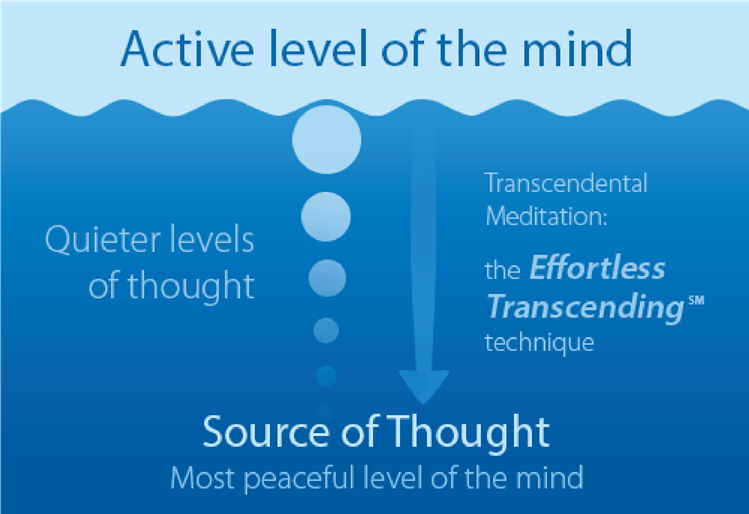
A useful analogy is the ocean.
At the surface,
waves are constantly moving. Deeper within
the ocean, there is progressively less movement. The waves
have not ceased to exist; they simply do not represent the entire depth of the
ocean.
In a similar
way, thoughts are part of the active
surface of the mind. Beneath
that activity are quieter levels of awareness, and at
the deepest level is the source of
thought—the most peaceful level of the mind.
Transcendental Meditation provides an effortless way to experience these deeper levels of
awareness rather than attempting to control what is happening on the surface.
What does research say about Transcendental Meditation and
brain functioning?
Research also offers a perspective on
what may happen in the brain during and following regular practice.
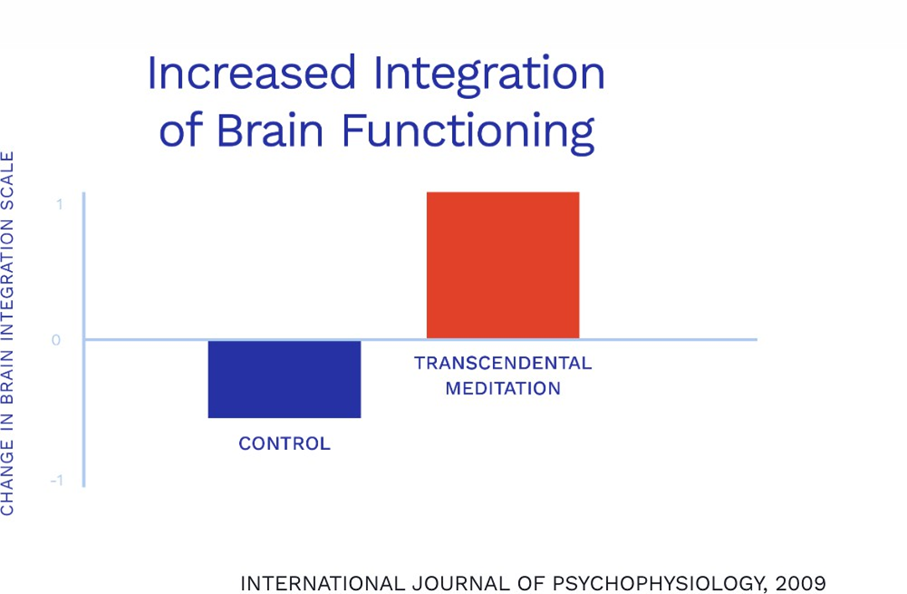
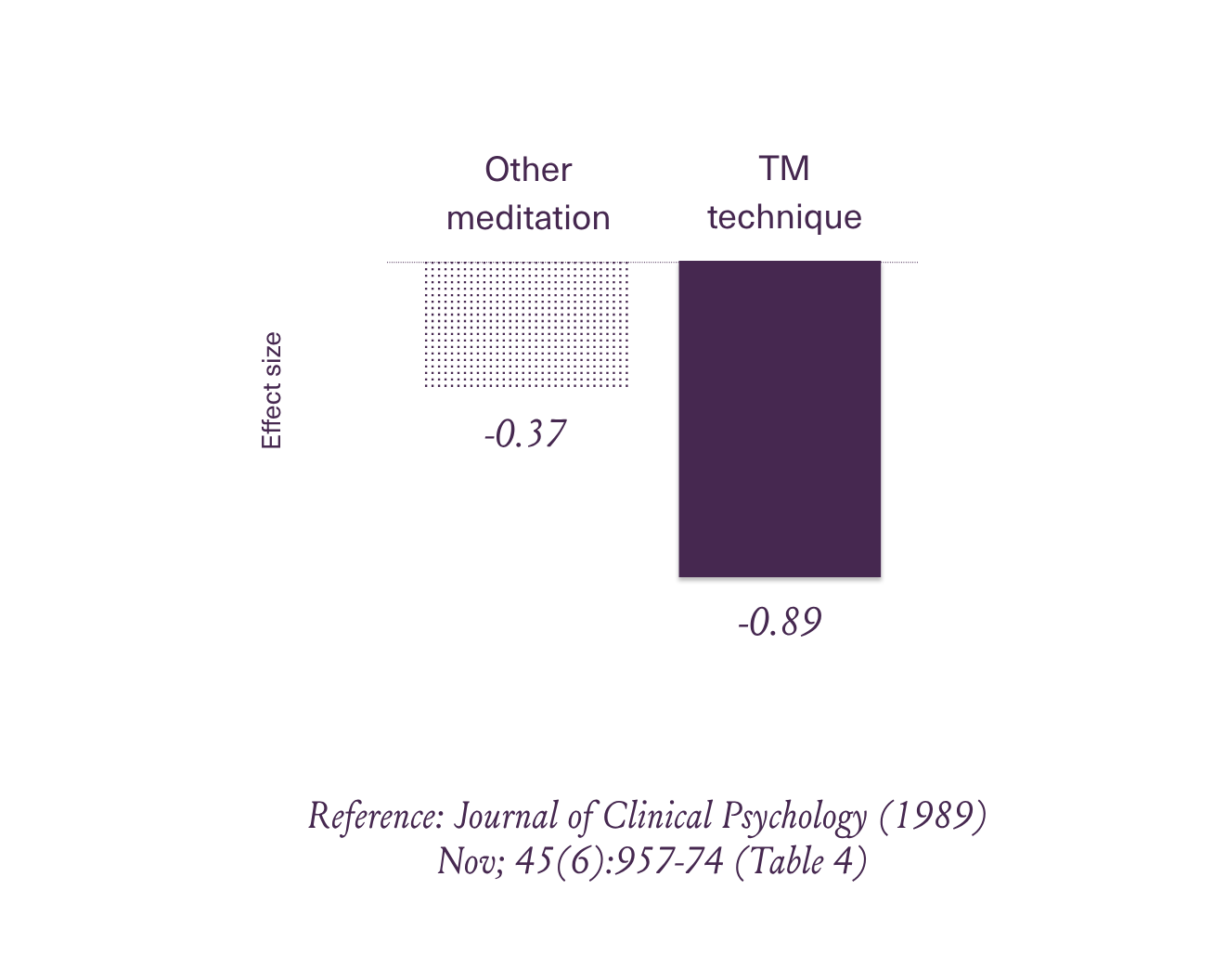
A relevant example comes from a 10-week
study of university students who learned the Transcendental Meditation
Programme. Compared with students who were randomly assigned to learn at a
later time, those who learned TM showed significant improvement on a Brain
Integration Scale, which incorporated several EEG measures recorded during task
performance.
The improvements included increased broadband
frontal EEG coherence and more efficient preparatory brain responses to
stimuli. The study also reported decreased sleepiness and differences in
habituation to stressful stimuli in the TM group.
These findings offer an encouraging perspective
on the effects of regular Transcendental Meditation practice. The improvements
in brain integration, preparatory responses, alertness and adaptation to
stressful stimuli suggest that the practice may support more integrated and
efficient functioning of the mind and brain.
This provides a valuable
scientific perspective on how regularly experiencing quieter levels of
awareness may contribute to greater coherence and balance in everyday life.
Can Transcendental Meditation help with overthinking?
Many people look for ways to deal with repetitive
thinking, constant mental activity or the feeling that the mind never switches
off.
Transcendental Meditation offers a different perspective. Rather than trying to stop thinking
or manage each thought individually, the practice allows the mind to settle
naturally.
There is no need to follow every
thought or deliberately push thoughts away.
The effortless process of
meditation is allowed to unfold naturally.
With regular practice, people may
experience greater clarity and ease in daily life. The emphasis is not on controlling individual thoughts, but on regularly experiencing quieter levels of awareness.
The deeper principle is simple: TM allows
the mind to experience quieter
levels of awareness without
requiring us to control the thoughts that arise.
How does Transcendental Meditation calm the mind?

The word "calm" does not have
to mean a mind with no thoughts. Transcendental Meditation takes an effortless approach
in which the mind can settle naturally, without force, suppression or intense
concentration.
Rather than asking practitioners to stop
thinking, fight distracting thoughts or constantly observe and judge them, TM spontaneously allows the mind to move towards quieter
and deeper levels of awareness.
Thinking remains an essential part of
everyday life, helping us plan, create, remember, imagine and solve problems.
The value of TM is not in making the mind incapable of thought, but in allowing
us to experience a deeper
level of awareness beyond the constant activity of thinking.
One of the defining features
of Transcendental Meditation is that meditation does not have to
become a struggle against the mind. As the mind settles inward, it can
experience quieter levels of awareness and move beyond the surface activity of
thought towards a deeper, more settled state of consciousness.
Transcendental
Meditation is not about making the mind do less; it is about allowing the mind to experience deeper levels of awareness beyond
its ordinary activity, enabling it to function and expand as per its true potential,
which is infinite.
Frequently Asked Questions
Does Transcendental Meditation Control
Your Thoughts?
No. Transcendental Meditation does not involve
controlling, suppressing or monitoring thoughts. No experience needs to be
forced during Transcendental Meditation.
Can Transcendental Meditation Help With Overthinking?
Yes. Transcendental Meditation does not
require you to solve or manage each thought individually. Instead, the
effortless practice allows the mind to settle naturally towards quieter levels of
awareness. It is the experience of many people that with regular practice, this
experience supports greater clarity, calmness and ease in daily life.
How does Transcendental Meditation Calm the Mind?
Transcendental Meditation does not depend on forceful concentration or trying to create silence. The mind naturally settles towards quieter levels of awareness through the effortless practice, allowing the experience of inner quiet to develop naturally.